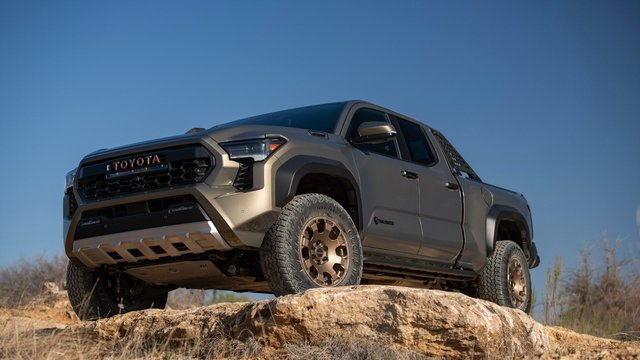
When it was introduced last year, for the 2025 model year, the Toyota Tacoma i-FORCE MAX Hybrid marked a new chapter in mid-size pickup capability. It pairs Toyota's proven turbocharged engine with hybrid-electric power for strong torque and better efficiency. With 326 system horsepower and 465 lb-ft of torque, this powertrain rivals many full-size trucks while keeping the Tacoma's legendary off-road prowess.
Before you decide, understanding the key differences between hybrid and gasoline models will help you choose the configuration that fits your driving needs and adventure plans.
Whether you're considering the refined Limited grade, the trail-ready TRD Off Road Premium, the performance-focused TRD Pro, or the expedition-capable Trailhunter, each hybrid model offers distinct capabilities. Asking the right questions ensures you select a Tacoma that aligns with your priorities - from towing capacity and fuel efficiency to technology integration and off-road performance.
What Are the Key Powertrain Differences Between Hybrid and Gas Models?
The 2026 Tacoma lineup offers three distinct powertrain configurations, each engineered for specific performance characteristics and driving scenarios.
The i-FORCE MAX Hybrid system pairs a 2.4 L turbocharged four-cylinder engine with electric motor assistance, generating 326 system horsepower and 465 lb-ft of torque. This configuration delivers substantially more low-end torque than gasoline variants, making it ideal for towing, hauling, and challenging off-road conditions where immediate power response matters most.
Gasoline models with the eight-speed automatic transmission produce 278 horsepower and 317 lb-ft of torque, while the six-speed manual configuration generates 270 horsepower and 310 lb-ft of torque. Both gasoline powertrains feature part-time four-wheel-drive systems, whereas hybrid models offer both part-time and full-time four-wheel-drive options depending on the grade selected.
Key Powertrain Specifications:
- i-FORCE MAX Hybrid: 326 hp / 465 lb-ft torque / 10.5 L/100 km combined fuel economy
- Gas Automatic: 278 hp / 317 lb-ft torque / 11.2 L/100 km combined fuel economy
- Gas Manual: 270 hp / 310 lb-ft torque / 11.9 L/100 km combined fuel economy
The hybrid system's torque advantage translates to more confident acceleration when merging, better performance at altitude, and improved capability when towing near maximum capacity. Fuel economy improvements of approximately 10-15% compared to gasoline models add measurable value for drivers covering substantial annual mileage.
How Does Towing Capacity Compare Across Tacoma Configurations?
Towing capability varies across the Tacoma lineup, with hybrid models offering competitive but not superior ratings compared to their gasoline counterparts.
Gasoline-powered Tacomas with the eight-speed automatic transmission and six-speed manual both achieve maximum towing capacity of 2,903 kg (6,400 lbs) when properly equipped. This rating applies across multiple trim levels and bed configurations, providing consistent capability for boat trailers, utility trailers, and recreational equipment.
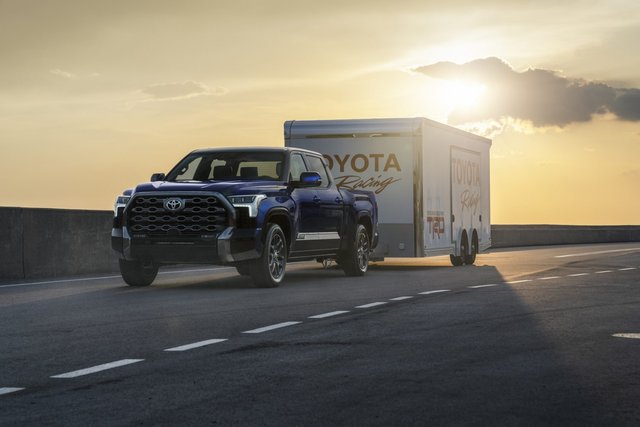
The i-FORCE MAX Hybrid models are rated for up to 2,722 kg (6,000 lbs) of towing capacity - slightly lower than gasoline variants due to additional hybrid system weight. However, the hybrid's substantial torque advantage of 465 lb-ft versus 317 lb-ft provides more confident towing performance, particularly on steep grades or during highway passing maneuvers.
For drivers prioritizing maximum towing capacity, gasoline models offer a modest advantage. For those who tow frequently in challenging terrain or prefer smoother, more responsive power delivery, the hybrid's torque characteristics may offset the slightly lower capacity rating.
Which Hybrid Grade Best Matches Your Intended Use?
The 2026 Tacoma i-FORCE MAX lineup includes four distinct grades, each optimized for specific owner priorities and adventure styles.
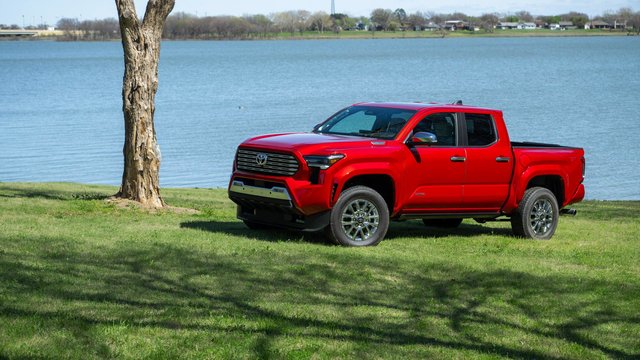
Limited (5-ft Bed) is the premium choice, featuring full-time four-wheel-drive, 18-inch Limited alloy wheels, power running boards, and a moonroof. Interior appointments include SofTex upholstery, heated and ventilated power-adjustable front seats, wood trim accents, and a head-up display. This grade prioritizes on-road refinement and daily driving comfort while maintaining capable off-road performance.
TRD Off Road Premium (5-ft Bed) balances off-road capability with everyday comfort. Standard equipment includes Bilstein shock absorbers, a locking rear differential, underbody protection for engine and fuel tank, cast aluminum running boards, and a moonroof. Technology features include a multi-terrain monitor, downhill assist control, crawl control, and trailer backup guide with straight path assist.
TRD Pro (5-ft Bed) delivers maximum off-road performance with FOX shock absorbers featuring three manually-selectable damping settings, 33-inch Goodyear Territory RT tires on 18-inch TRD Pro alloy wheels, and a front stabilizer disconnect mechanism. Additional equipment includes a TOYOTA heritage grille with LED light bar, ARB steel rear bumper with recovery hooks, IsoDynamic Performance front seats, and a head-up display.
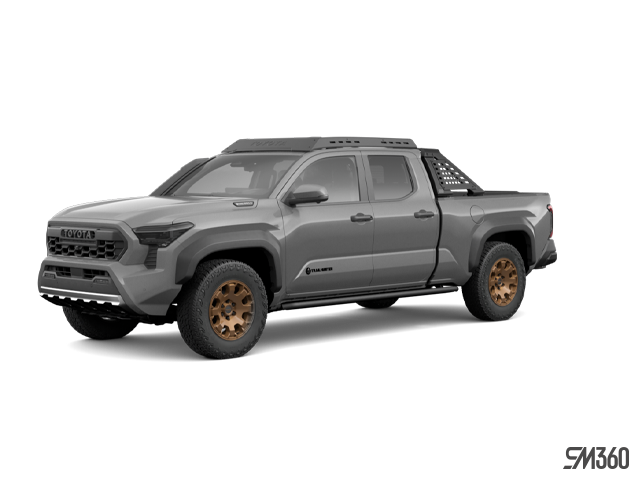
Trailhunter (6-ft Bed) is the expedition-oriented flagship, pairing long-bed practicality with extreme off-road capability. This grade features Old Man Emu shock absorbers, hot-stamped steel skid plates protecting front and transmission components, rock rails, and a bed utility bar with removable MOLLE panels. The longer bed length accommodates overlanding equipment while maintaining the hybrid powertrain's strong torque delivery.
What Technology Features Are Standard Versus Optional?
Technology integration varies across Tacoma grades, with hybrid models generally receiving more comprehensive standard equipment compared to base gasoline variants.
All Tacoma models include Toyota Multimedia with wireless Apple CarPlay and Android Auto compatibility, Bluetooth connectivity, and Toyota Assistant voice recognition. However, screen size and connected services differ by grade - base models feature an 8-inch touchscreen with Service Connect, Safety Connect, and Remote Connect (three-year trial), while premium grades upgrade to a 14-inch touchscreen adding Drive Connect capability.
Hybrid-specific grades include additional technology features as standard equipment. The Limited, TRD Off Road Premium, and TRD Pro all feature digital key with card key, wireless smartphone charging, and 12.3-inch full digital gauge clusters. The Limited and TRD Pro add head-up displays and digital rear view mirrors for enhanced visibility and information access.
Audio systems range from six-speaker configurations on base models to 10-speaker JBL systems with portable Bluetooth speakers on premium grades. The portable speaker detaches for use outside the vehicle, adding versatility for camping, tailgating, and outdoor activities.
Safety technology remains consistent across the lineup, with all models featuring Toyota Safety Sense 3.0 including forward collision mitigation, lane departure warning, and adaptive cruise control capabilities. Premium grades add intelligent clearance sonar, Intuitive Parking Assist with auto braking, and panoramic view monitor systems for enhanced low-speed maneuvering confidence.
How Do Bed Length Options Affect Capability and Daily Use?
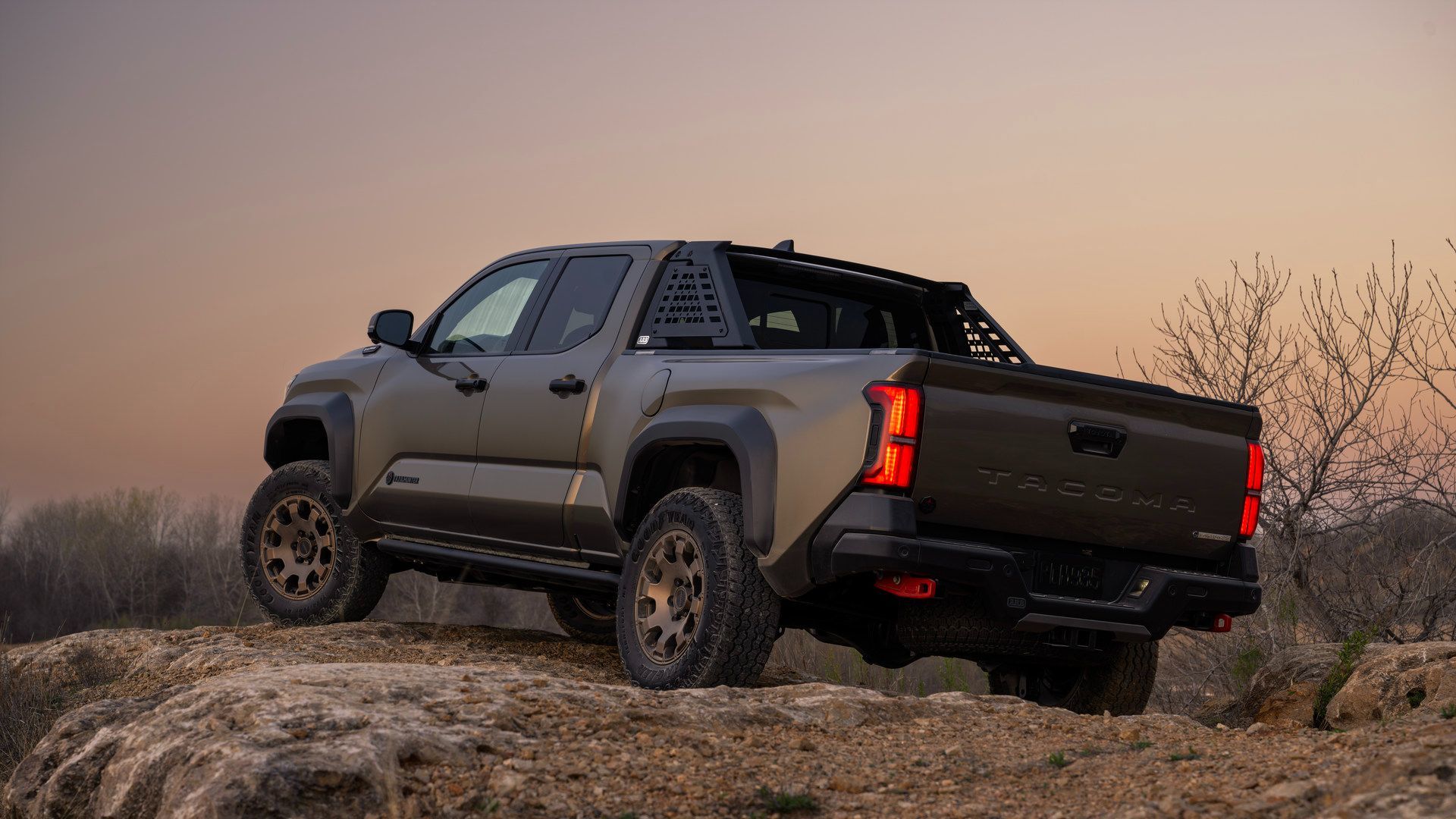
The 2026 Tacoma offers two bed configurations - 5-foot and 6-foot options - each with distinct advantages depending on intended use patterns and cargo requirements.
The 5-foot bed measures 1,532 mm (60.3 inches) in length with 1,136 mm (44.7 inches) of width and 539 mm (21.2 inches) of depth. This shorter configuration reduces overall vehicle length to 5,411 mm (213 inches), improving maneuverability in urban environments, parking structures, and tight trail situations. The shorter wheelbase of 3,350 mm (131.9 inches) also enhances approach and departure angles for off-road driving.
The 6-foot bed extends length to 1,867 mm (73.5 inches) while maintaining identical width and depth specifications. Overall vehicle length increases to 5,744 mm (226.1 inches) with wheelbase extending to 3,685 mm (145.1 inches). This configuration accommodates full sheets of plywood, longer camping gear, and expedition equipment without requiring tailgate-down transport.
Both bed configurations include cargo bed tie-downs as standard equipment. Premium grades add bed rail systems with adjustable tie-down cleats for enhanced cargo management flexibility. Select models feature bed power ports providing 12V and USB-C charging, while others include 400-watt (120V) cargo bed power outlets for operating tools and equipment directly from the truck bed.
For hybrid models, only the Trailhunter grade offers the 6-foot bed option. The Limited, TRD Off Road Premium, and TRD Pro exclusively feature 5-foot beds, prioritizing maneuverability and off-road geometry over maximum cargo length.
What Off-Road Features Differentiate TRD Grades?
Toyota's TRD (Toyota Racing Development) branding encompasses multiple grades with progressively advanced off-road capabilities and specialized equipment.
The TRD Off Road Premium serves as the foundation, featuring Bilstein shock absorbers, a locking rear differential, and comprehensive underbody protection for engine, fuel tank, and transfer case. Electronic aids include downhill assist control, crawl control for precise low-speed rock crawling, multi-terrain select with multiple surface-specific modes, and a multi-terrain monitor providing undercarriage camera views for obstacle navigation.
The TRD Pro builds upon this foundation with FOX shock absorbers offering three manually-selectable damping settings for terrain-specific tuning. The 33-inch Goodyear Territory RT tires mounted on 18-inch TRD Pro alloy wheels provide increased ground clearance and aggressive tread patterns for challenging conditions. A front stabilizer disconnect mechanism allows increased wheel articulation for maintaining traction over extreme terrain irregularities.
Additional TRD Pro equipment includes a TOYOTA heritage grille with integrated LED light bar, Rigid LED fog lamps for enhanced trail visibility, TRD Performance air intake and exhaust systems, and an ARB steel rear bumper with dual red recovery hooks. Four auxiliary switches (95A capacity) support aftermarket accessory integration without compromising vehicle electrical systems.
The Trailhunter takes a different approach, prioritizing expedition capability over pure performance. Old Man Emu shock absorbers provide long-travel suspension tuning optimized for loaded overlanding scenarios. Hot-stamped steel skid plates protect front and transmission components from trail damage. Rock rails provide body protection and step functionality. The bed utility bar with removable MOLLE panels accommodates modular gear mounting systems popular in the overlanding community.
What Are the Real-World Fuel Economy Expectations?
Official fuel consumption ratings provide baseline expectations, though real-world results vary based on driving conditions, load, and individual driving styles.
The i-FORCE MAX Hybrid achieves combined fuel economy of 10.5 L/100 km, with city consumption of 10.5 L/100 km and highway consumption of 9.7 L/100 km. This is the most efficient Tacoma configuration, delivering approximately 10-15% improvement over gasoline models in typical mixed driving.
Gasoline models with eight-speed automatic transmissions consume 11.2 L/100 km combined (12.5 L/100 km city, 9.6 L/100 km highway). The six-speed manual configuration returns 11.9 L/100 km combined (13.2 L/100 km city, 10.3 L/100 km highway), reflecting the efficiency penalty of manual transmission operation in modern turbocharged applications.
The hybrid system's advantage appears most pronounced in city driving and stop-and-go traffic, where electric motor assistance reduces engine load during acceleration events. Highway efficiency differences narrow considerably, as sustained cruising speeds minimize opportunities for regenerative braking energy capture.
All Tacoma models feature a 69-litre (18-gallon) fuel tank, providing competitive driving range between fill-ups. Based on combined consumption figures, the hybrid offers approximately 657 km of range per tank, while gasoline automatic models provide approximately 616 km. These estimates assume ideal conditions - towing, cargo load, terrain, and driving style all impact real-world results.
For drivers covering 25,000 km annually in mixed driving, the hybrid's efficiency advantage translates to approximately 175 fewer litres of fuel consumed compared to gasoline automatic models. At current Ontario fuel prices, this means measurable annual savings that partially offset the hybrid's premium pricing.
Your 2026 Tacoma i-FORCE MAX Awaits
The 2026 Toyota Tacoma i-FORCE MAX Hybrid sets new standards in the mid-size pickup segment with 326 system horsepower and 465 lb-ft of torque. This powertrain provides confident towing performance and strong off-road capability while achieving the best fuel economy in the Tacoma lineup.
Whether you prioritize the refined comfort of the Limited, the balanced capability of the TRD Off Road Premium, the extreme performance of the TRD Pro, or the expedition focus of the Trailhunter, there's a hybrid configuration engineered for your specific adventure style.
Understanding the answers to these seven essential questions ensures you select the Tacoma that best matches your intended use, budget priorities, and feature preferences. The hybrid powertrain's torque advantage and fuel efficiency improvements deliver tangible benefits for drivers who regularly tow, venture off-pavement, or accumulate substantial annual mileage.
Visit Erin Park Toyota to explore the 2026 Tacoma i-FORCE MAX Hybrid lineup and find the grade that fits your driving needs.