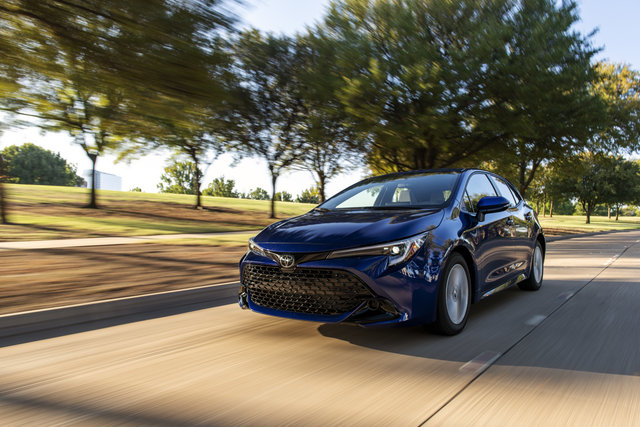
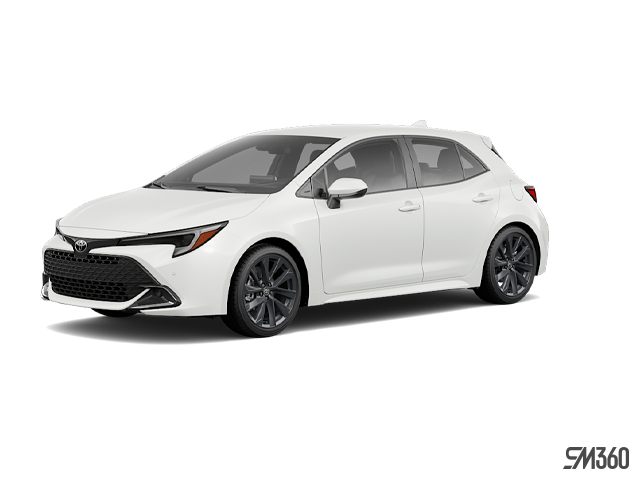
A compact hatch has to do two jobs at once: get you through Ontario traffic without fuss, and still feel alive when the road opens up. The 2027 Corolla Hatchback leans into that second job harder than most, thanks to a chassis system called Active Cornering Assist.
If you’ve wondered what actually keeps a small car settled through a tight ramp or a roundabout, this is the piece of engineering doing that work quietly in the background.
What Active Cornering Assist Actually Is
Active Cornering Assist is part of the Corolla Hatchback’s Toyota New Global Architecture (TNGA) platform, the same underlying structure that ties the powertrain and chassis together. It works alongside a low centre of gravity, a stiff body structure, and a multi-link rear suspension to keep the car composed when you turn the wheel.
It is not a separate gadget you switch on. It is baked into how the car’s suspension and stability systems respond the moment you start cornering, so the effect shows up as a feeling rather than a menu setting.
How It Works With the Rest of the Chassis
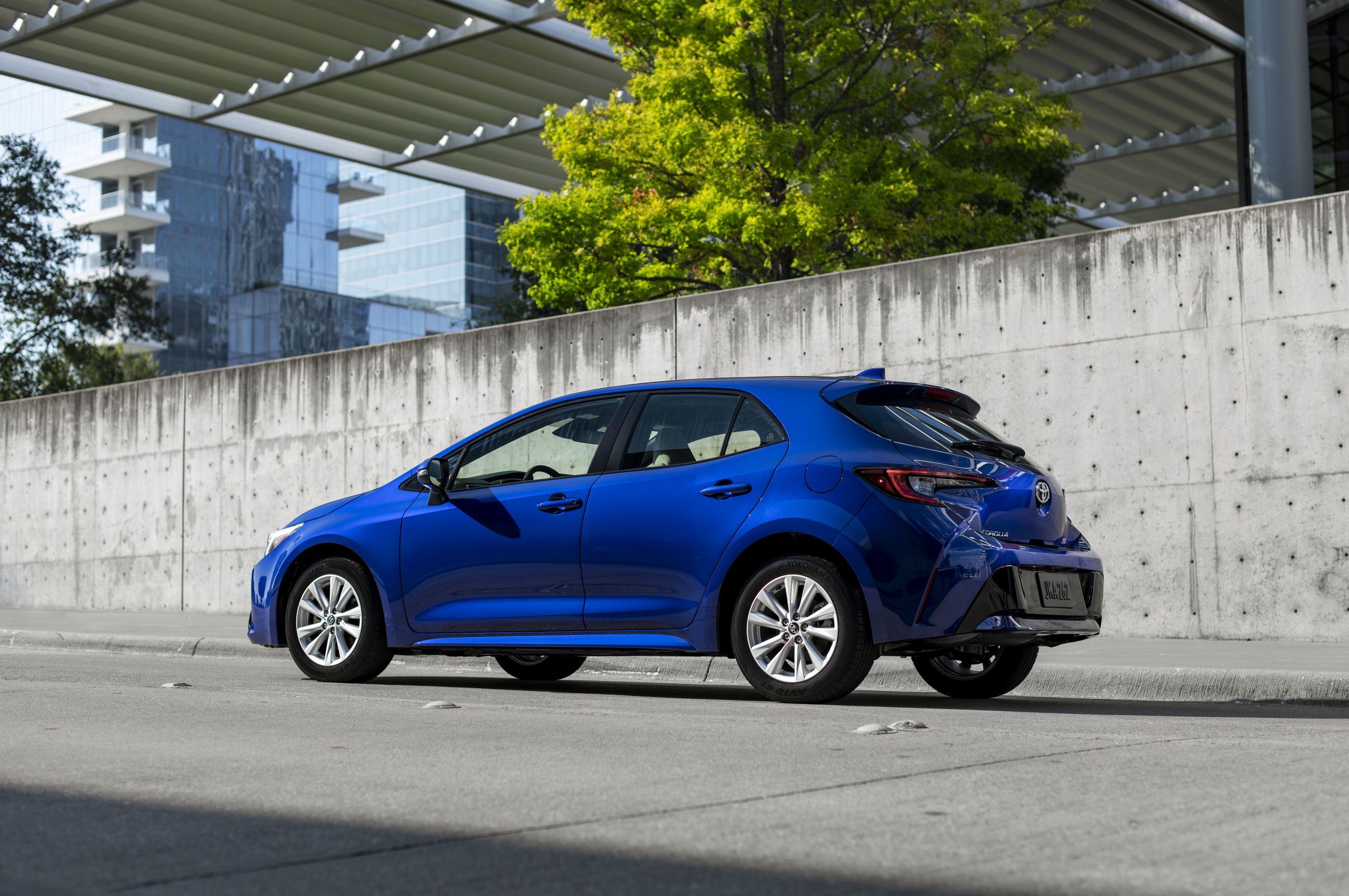
The Corolla Hatchback pairs an independent MacPherson strut front suspension with a multi-link rear suspension and front and rear stabilizer bars. Active Cornering Assist works within that setup, helping manage body motion as weight shifts through a turn.
That chassis work is backed by the Toyota Star Safety System, which bundles Vehicle Stability Control, traction control, anti-lock brakes, electronic brake force distribution, and brake assist. These systems intervene only when needed; the rest of the time, the car simply carries the composure the chassis was tuned for.
The powertrain plays a role too. Every Corolla Hatchback runs a 2.0 L four-cylinder engine making 169 hp and 151 lb-ft of torque, paired with a Direct Shift CVT that simulates 10 sequential shift steps and includes a sport mode and Launch Gear. That transmission tuning keeps power delivery matched to the chassis, so acceleration out of a corner feels connected rather than delayed.
What It Does, and What It Doesn’t, in Everyday Driving
During normal commuting, Active Cornering Assist isn’t doing anything dramatic. It isn’t a track-focused system, and it isn’t going to turn a grocery run into a performance drive. Its job is to keep everyday cornering, the kind you do dozens of times a day, feeling planted and predictable.
That matters more than it sounds like on Ontario roads. A suburban roundabout, a tightening highway on-ramp, or a quick lane change to avoid a merging vehicle are all moments where a car’s composure either reassures you or catches you off guard. The Corolla Hatchback’s ground clearance of 130 mm and curb weight of 1,390 kg keep the car low and light enough that this chassis tuning can do its job without extra bulk working against it.
Who Notices the Difference
Drivers coming from a taller crossover, or from an older compact car with softer suspension tuning, tend to notice this first: less body lean turning into a corner, and steering that feels more directly connected to what the front wheels are doing. It’s a difference in confidence rather than outright speed.
Shoppers who want a hatch that’s genuinely easy to live with daily but still rewards a bit of enthusiasm on a backroad or a highway on-ramp are the ones who’ll appreciate this most. The Corolla Hatchback’s 660 L of cargo space behind the rear seats and seating for five keep it practical for that daily-driver role, while the chassis tuning covers the fun-to-drive side.
Grade Line-up and How the Feel Changes at the Top
Active Cornering Assist and the underlying suspension layout run across the Corolla Hatchback lineup. What changes from grade to grade is wheel size and some of the surrounding equipment, both of which shift the overall experience without changing the core chassis engineering.
|
Grade
|
Wheel Size
|
Notable Step-Up
|
|
SE
|
15 in
|
7-inch digital gauge cluster, 8-inch touchscreen
|
|
SE Plus
|
16 in
|
Heated front seats, leather-wrapped steering wheel
|
|
SE Upgrade
|
18 in
|
Heated steering wheel, wireless charging
|
|
XSE
|
18 in
|
12.3-inch gauge cluster, 10.5-inch touchscreen
|
Larger wheels on the SE Upgrade and XSE grades change the tire contact patch and sidewall stiffness, which can sharpen steering feedback further on top of what the chassis already delivers. Every grade also carries Toyota Safety Sense 3.0, including Lane Tracing Assist and a Pre-Collision System, so the confidence built into the chassis is matched by standard driver-assist coverage.
Feeling It for Yourself at Erin Park Toyota
The 2027 Corolla Hatchback pairs a tuned, TNGA-based chassis with a straightforward lineup of four grades, each adding equipment without changing the car’s core handling character. Active Cornering Assist is part of what makes that character consistent from the base SE up to the XSE.
No spec sheet fully captures how a car turns into a corner. Visit Erin Park Toyota in Mississauga to confirm which 2027 Corolla Hatchback grades are on their way, and book a test drive to feel the cornering composure for yourself.