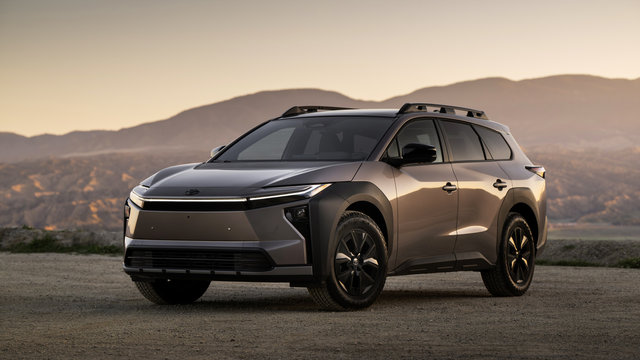
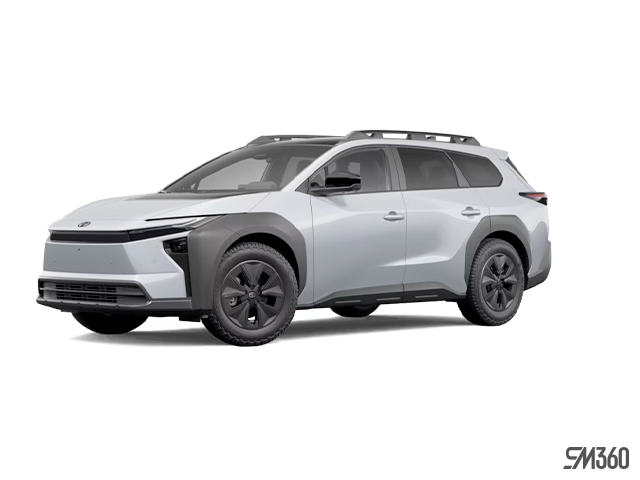
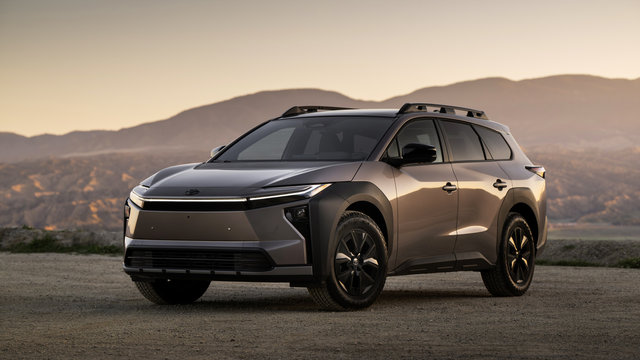
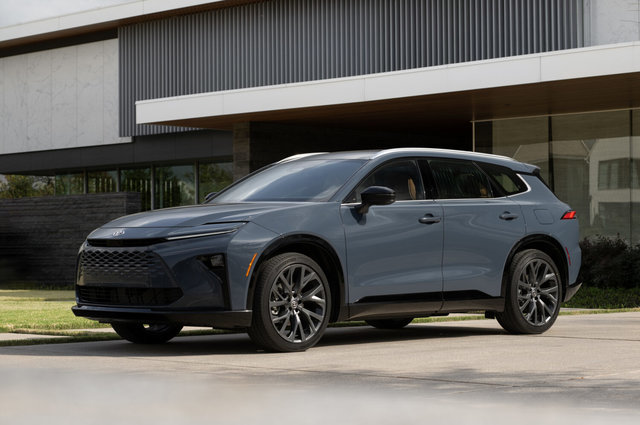
August in Ontario means one more run of weekend trips before school schedules and shorter days take over. Tents, coolers, folding chairs, and a dog that takes up as much room as a passenger all need somewhere to go. The 2026 Toyota bZ Woodland is Toyota’s rugged electric SUV built around that packing puzzle, with roof rails, added ground clearance, and a cargo hold sized for gear. Here’s how it holds up for a gear-heavy weekend.
Why Camping Weekends Push an EV to Prove Itself
A grocery run and a weekend at a provincial park ask different things of an SUV. Camping trips load the cargo area to the roofline, put tires on gravel access roads, and often mean driving further than a daily commute allows.
An electric SUV built for camping duty has to answer three questions: does the cargo area actually swallow bulky gear, can the suspension and tires handle a rutted access road, and does the battery cover the trip there and back without a charging detour. The bZ Woodland was built around that brief, with standard all-wheel drive, 215 mm of ground clearance, and a cargo hold shaped for tents and bins.
Cargo Room and a Cabin That Bends Around Your Gear
Behind the second row, the bZ Woodland holds 957 L of cargo, enough for a cooler, a couple of duffel bags, and a stack of folding chairs without touching the back seat. Fold the 60/40 split rear seats flat and that grows to 2,104 L, room for a tent, sleeping pads, and bins of camp kitchen gear laid flat instead of stacked. The Woodland Premium carries slightly less, at 942 L behind the seats and 2,033 L folded.
| |
bZ Woodland
|
bZ Woodland Premium
|
|
Behind Rear Seats
|
957 L
|
942 L
|
|
Seats Folded
|
2,104 L
|
2,033 L
|
A power back door with a kick sensor helps when your hands are full, and the rear centre armrest splits the back seat for a passenger riding next to a cooler rather than on top of one. A dual-opening centre console lid, a cargo lamp, and a 120V/1500-watt outlet keep smaller items organized and give you a spot to run a lantern or a slow cooker at the site.
Ladder-style roof rails come standard on both grades, adding a mounting point for a kayak or bike rack when the cargo hold alone isn’t enough.
Ground Clearance, AWD, and Tires for the Road In
Getting to the site is often rougher than the trip itself. The bZ Woodland’s 215 mm of ground clearance clears washboard gravel and shallow ruts that would scrape a lower SUV. Standard dual-motor all-wheel drive, with X-MODE and Grip Control, adjusts power delivery on loose dirt or wet grass, and dedicated Snow/Dirt and Deep Snow/Mud settings tune the system to the surface underneath.
The base bZ Woodland rides on 18-inch wheels wrapped in P235/60R18 all-season tires, while the Woodland Premium can be optioned with P235/65R18 all-terrain tires for access roads that see more mud than pavement. For a small utility trailer or a compact camping trailer, both grades tow up to 3,500 lbs (1,588 kg).
Range and Charging for Longer Trips
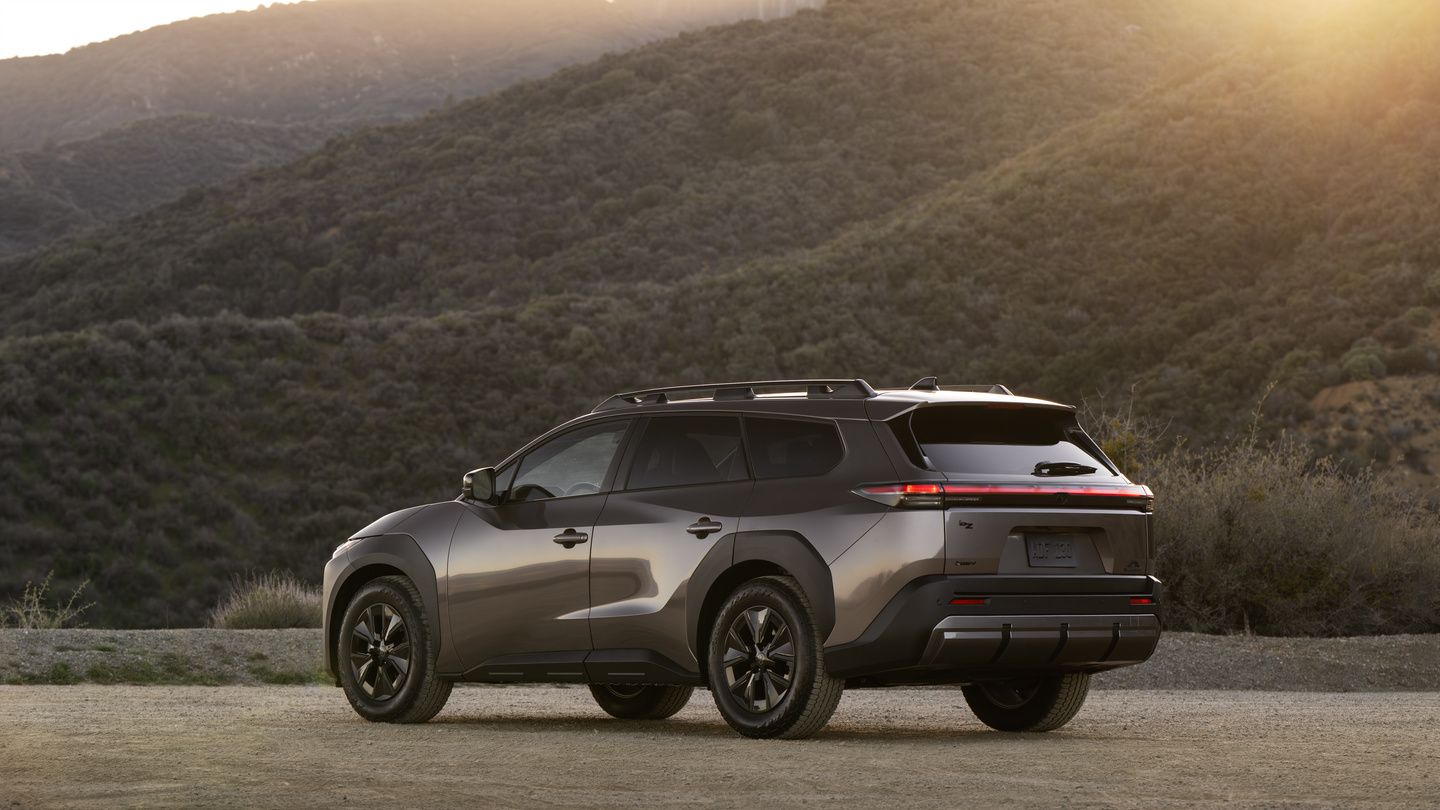
The bZ Woodland carries an estimated range of up to 452 km, enough to cover a return trip to most Ontario camping destinations within a few hours’ drive without stopping to charge. Choosing the available all-terrain tires trims that estimate to 418 km, worth weighing if your regular camping loop runs close to the range’s edge.
Charging runs through a NACS port with a maximum DC fast-charging rate of 150 kW, adding meaningful range in about 30 minutes from 10 to 80 percent at a compatible station. At home or at a campground with Level 2 service, the 11 kW onboard charger handles overnight top-ups. Apple Maps EV Route Planning comes standard, mapping charging stops into a route before a longer drive north.
Woodland or Woodland Premium: Matching the Trim to Your Trips
Both grades share the same 375 hp, 538 lb-ft dual-motor powertrain, a 74.7 kWh battery, and a 4.4-second 0-100 km/h time, so the camping-relevant differences come down to tires, cargo, and cabin comfort rather than performance.
|
Feature
|
bZ Woodland
|
bZ Woodland Premium
|
|
Tires
|
P235/60R18 all-season
|
P235/65R18 all-terrain (available)
|
|
Audio
|
6-speaker
|
9-speaker JBL
|
|
Front Seats
|
Heated
|
Heated, ventilated
|
|
Roof
|
Standard
|
Panoramic fixed-glass w/power sunshade
|
The base bZ Woodland is the practical pick for a family that wants cargo room and all-wheel drive without paying for extras that don’t matter at a campsite. The Woodland Premium adds ventilated front seats for the drive home, a stronger JBL system, and the all-terrain tire option, worth it for buyers who plan to reach sites the base tires wouldn’t handle as confidently.
Who the bZ Woodland Suits Best
The bZ Woodland fits an Ontario buyer who wants an electric SUV that keeps up with weekend camping, cottage runs, and gear-heavy road trips, not just daily commuting. Families who pack a full kit each summer get the most from the folding rear seats and the deep cargo hold behind them.
Toyota’s standard bZ SUV stays closer to road-trip efficiency and a lower ride height. The Woodland trades some of that polish for roof rails, extra clearance, and tires built for the road into the site. For anyone whose summer weekends involve a tent more often than a hotel, that trade lands in the right place.
Plan Your Next Camping Trip Around the bZ Woodland
The 2026 Toyota bZ Woodland pairs a cargo hold sized for tents and coolers with the ground clearance, all-wheel drive, and towing capacity to reach sites a standard crossover would avoid, without giving up its 452 km estimated range.
Visit Erin Park Toyota in Mississauga to see the bZ Woodland’s cargo hold and folding seats in person, and compare the Woodland and Woodland Premium trims before your next trip.