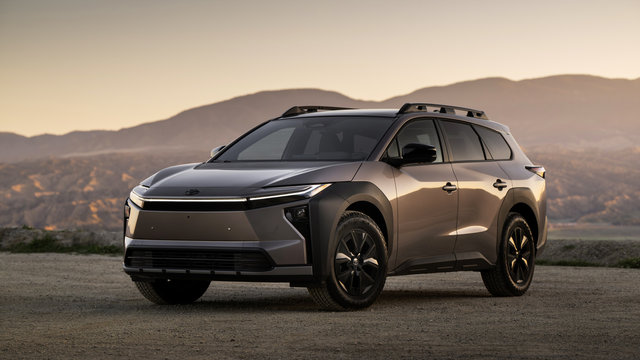
Packing for a summer road trip usually means one thing: too much stuff, not enough room. Families across Ontario heading to a cottage or a multi-day tournament often have to choose between packing gear and keeping every seat free for passengers.
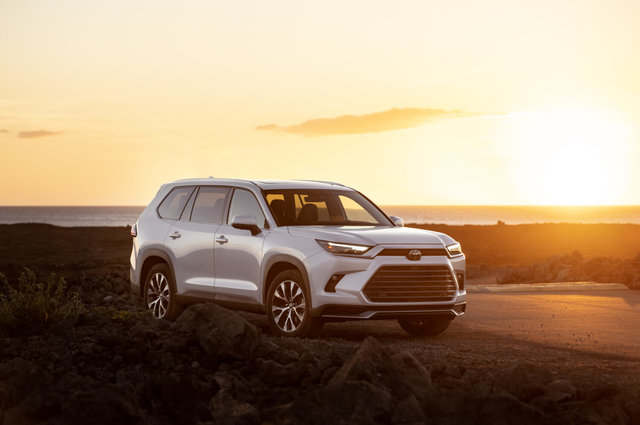
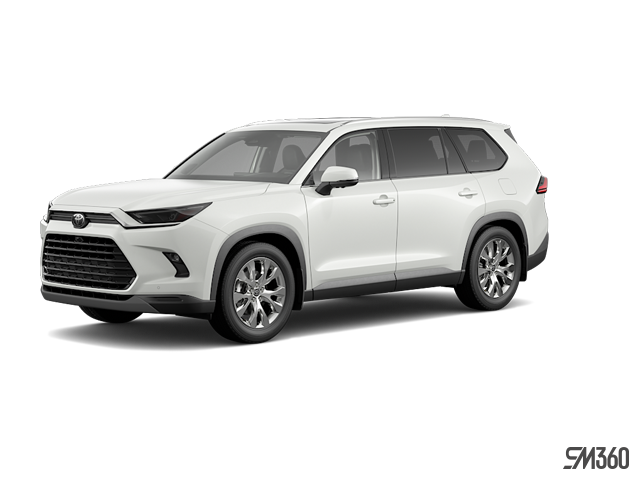
The 2026 Toyota Grand Highlander is built around a different idea. Its cargo area shifts through three distinct configurations, so the choice between people and packing rarely has to happen at all.
Why Cargo Configurations Matter on Longer Trips
A three-row SUV that only works well with the third row folded down isn’t built for family road trips. The Grand Highlander is designed around three cargo states, so the space behind the wheels adjusts to what the trip actually needs.
For a day trip with all three rows in place, that space sits behind the third-row seat. Fold the third row down and the area behind the second row opens up for bigger loads like tents or bike bags. Fold both rear rows and the full cargo hold clears out for its maximum haul, from coolers to a full family’s luggage stack.
That progression matters because most Ontario trips are not one-size-fits-all. A day at the lake needs different space than a week away with the whole family along for the drive.
Three Cargo Zones, By the Numbers
|
Configuration
|
Cargo Volume
|
Best For
|
|
Behind third row (all seats up)
|
586 L
|
carry-on suitcases, groceries, day-trip gear
|
|
Third row folded
|
1,640 L
|
tents, bike bags, multi-day luggage
|
|
Both rear rows folded
|
2,761 L
|
kayaks, large coolers, full luggage stacks
|
With every seat in place, the area behind the third row holds seven carry-on suitcases, useful when a full car of passengers still needs luggage space. That maximum figure also outpaces the standard Highlander’s maximum cargo hold of 2,387 litres, even though the Grand Highlander keeps all three rows available for passengers the whole time.
Seating Layouts and Loading Features Built for Gear-Heavy Trips
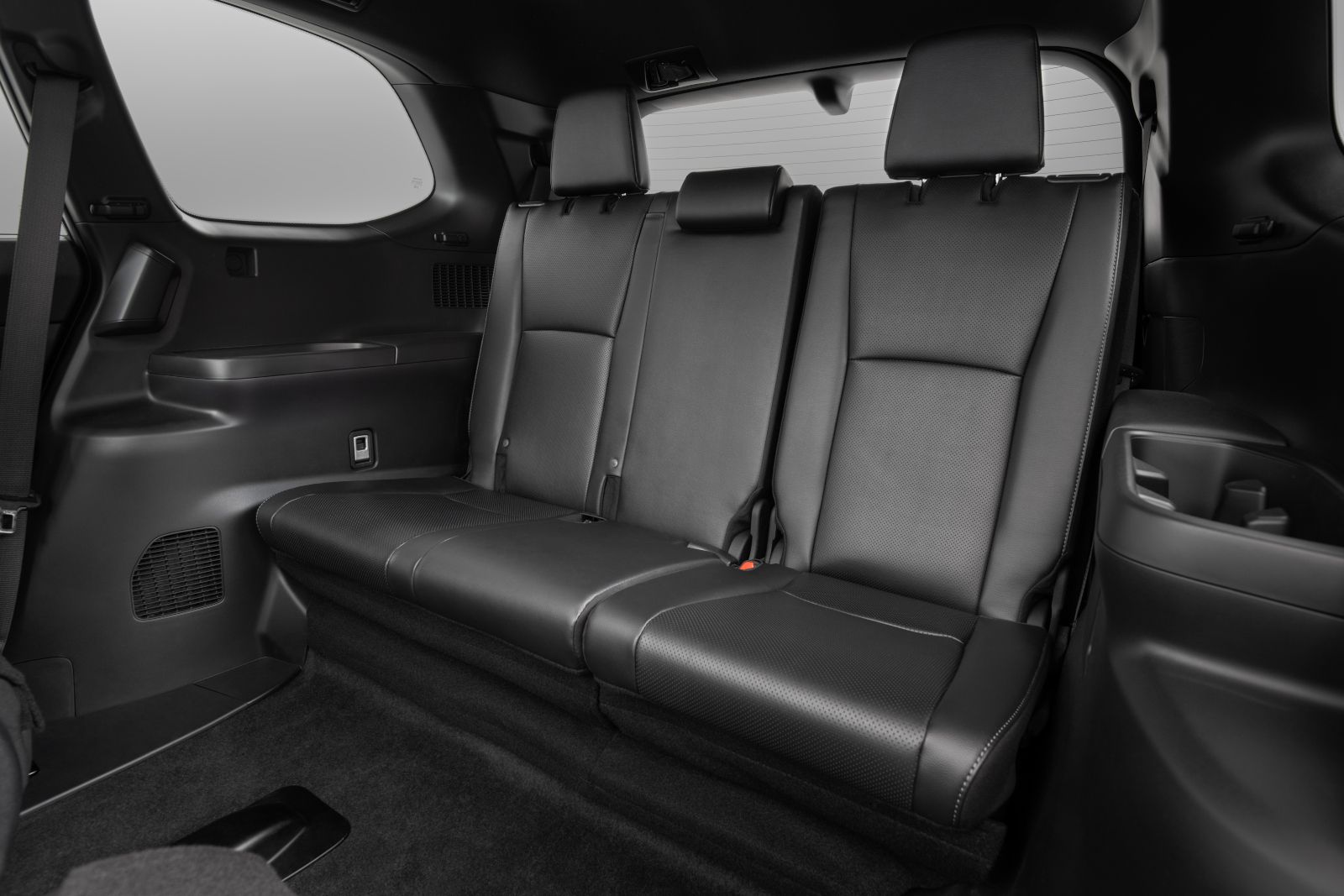
The XLE seats eight, with a bench across the second row. Limited swaps in second-row captain’s chairs for seven-passenger seating, though an eight-passenger bench configuration is also offered on Limited. Platinum Hybrid MAX keeps the captain’s chair, seven-passenger layout.
That choice affects loading as much as riding. A bench keeps a centre pass-through and an extra seat, while captain’s chairs open a walk-through aisle to the third row and add a removable console between the front two seats.
Loading gets easier further back, too. Every trim includes a power back door, and Limited and Platinum Hybrid MAX upgrade to a kick-sensor version that opens hands-free, useful with arms full of coolers or bags. Limited and Platinum Hybrid MAX also add a 120V, 1500W outlet for charging equipment on multi-day trips, and the lineup includes six USB-C ports so devices stay charged without competing for one plug.
Smart cabin storage throughout the cabin holds phones, tablets, and water bottles out of the cargo area, so packed space stays packed.
Limited and Platinum Hybrid MAX also add a panoramic moonroof, and Platinum Hybrid MAX further heats and ventilates the second row for long highway stretches.
Matching the Powertrain to the Trip
Three powertrains are available across the lineup, and each suits a different kind of trip. The 2.5L hybrid four-cylinder in XLE and Limited delivers 243 horsepower and returns a combined 7.0 L/100km, with a 65 L fuel tank that stretches highway refills further apart. Those trims tow up to 3,500 lbs (1,588 kg).
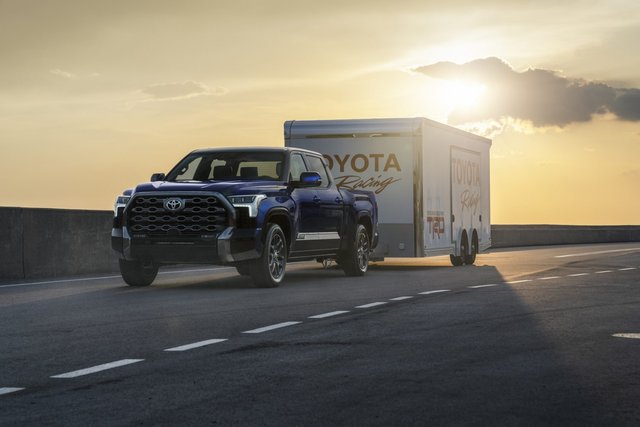
Trailer-heavy trips point toward the Platinum Hybrid MAX. Its 2.4L turbocharged Hybrid MAX engine makes 362 horsepower and 400 lb-ft of torque, raising the tow rating to 5,000 lbs (2,268 kg) at a combined 8.8 L/100km.
The 2.4L turbocharged gas engine, available on XLE and Limited, produces 265 horsepower and 310 lb-ft of torque, with the same 5,000 lbs (2,268 kg) towing rating as the Platinum Hybrid MAX and a larger 68 L fuel tank. Payload ranges from 1,433 lbs (650 kg) on Platinum Hybrid MAX up to 1,731 lbs (785 kg) on the gas XLE, since the heavier hybrid hardware trims some of that margin. All three powertrains pair with standard all-wheel drive.
Who Benefits Most From This Setup
Families running errands, school pickups, and weekend day trips get the most from the behind-third-row space alone. It handles carry-on-sized loads without ever folding a seat.
Campers, cyclists, and anyone hauling bulky single items benefit from the third-row fold. A tent, a stack of bike bags, or multi-day luggage fit without giving up the second row for passengers.
Buyers hauling a boat or larger trailer should look toward the Platinum Hybrid MAX for its 5,000 lbs (2,268 kg) tow rating and 400 lb-ft of torque, while buyers chasing the best fuel economy without the tow bump are well served by the XLE or Limited hybrid.
Finding the Right Grand Highlander Configuration
The 2026 Toyota Grand Highlander’s three-zone cargo area, seating choices, and powertrain lineup give Ontario drivers a three-row SUV that adjusts to the trip instead of forcing a compromise between passengers and gear.
Visit Erin Park Toyota in Mississauga to see the Grand Highlander’s cargo configurations in person and find the seating layout and powertrain that fits your next trip.