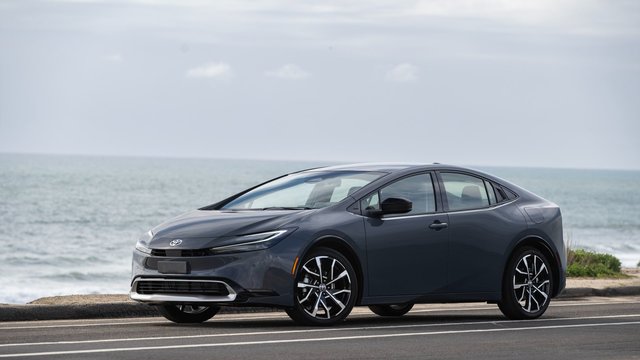
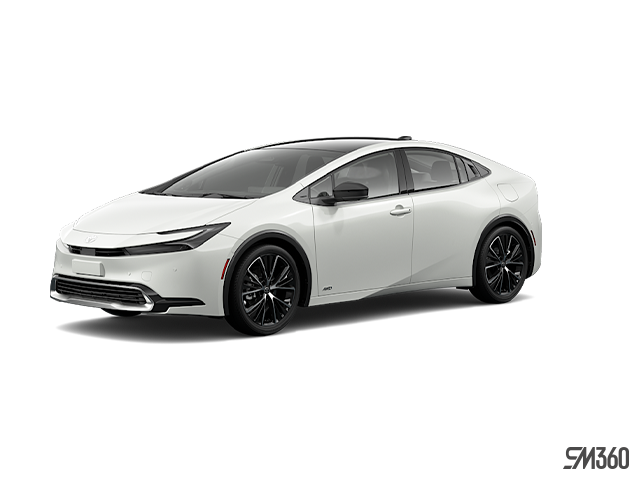
Deciding between the 2026 Toyota Prius Hybrid and Prius Plug-in Hybrid isn’t about which one is the better car. It comes down to how you drive and where you park at night.
Ontario shoppers weighing these two often have different priorities. Some need dependable traction through a snowy commute. Others want to plug in at home and skip the pump for weeks at a time. Here’s how the two stack up.
2026 Prius HEV vs PHEV at a Glance
|
Spec
|
Prius Hybrid (XLE AWD / Limited AWD)
|
Prius Plug-in Hybrid (SE / XSE / XSE Premium)
|
|
Drivetrain
|
AWD-e (electronic on-demand AWD)
|
FWD
|
|
Horsepower
|
196 hp
|
220 hp
|
|
Torque
|
139 lb-ft
|
139 lb-ft
|
|
Combined fuel economy
|
4.8 L/100km
|
SE: 4.5 L/100km; XSE/XSE Premium: 4.9 L/100km
|
|
Electric-only range
|
None rated
|
SE: 72 km; XSE/XSE Premium: 64 km
|
|
Level 2 charge time
|
Not applicable
|
Approximately 4 hours
|
|
Ground clearance
|
152 mm
|
SE: 142 mm; XSE/XSE Premium: 152 mm
|
Powertrain and Performance
Both versions of the 2026 Prius share a 2.0-litre four-cylinder gas engine paired with an electronically controlled continuously variable transmission. The Plug-in Hybrid’s total system output reaches 220 horsepower, with a larger battery and electric motor doing more of the work. The Hybrid puts out 196 horsepower.
Despite that gap, both models produce identical 139 lb-ft of torque. The extra power in the Plug-in Hybrid shows up in how the car feels off the line and while merging, not in towing or hauling.
The Hybrid’s AWD-e system adds a rear electric motor that can drive the rear wheels independently of the front axle. This is a different layout from the Plug-in Hybrid’s front-wheel-drive-only setup. The Hybrid reaches 100 km/h in 7.2 seconds.
Efficiency, Range and Charging
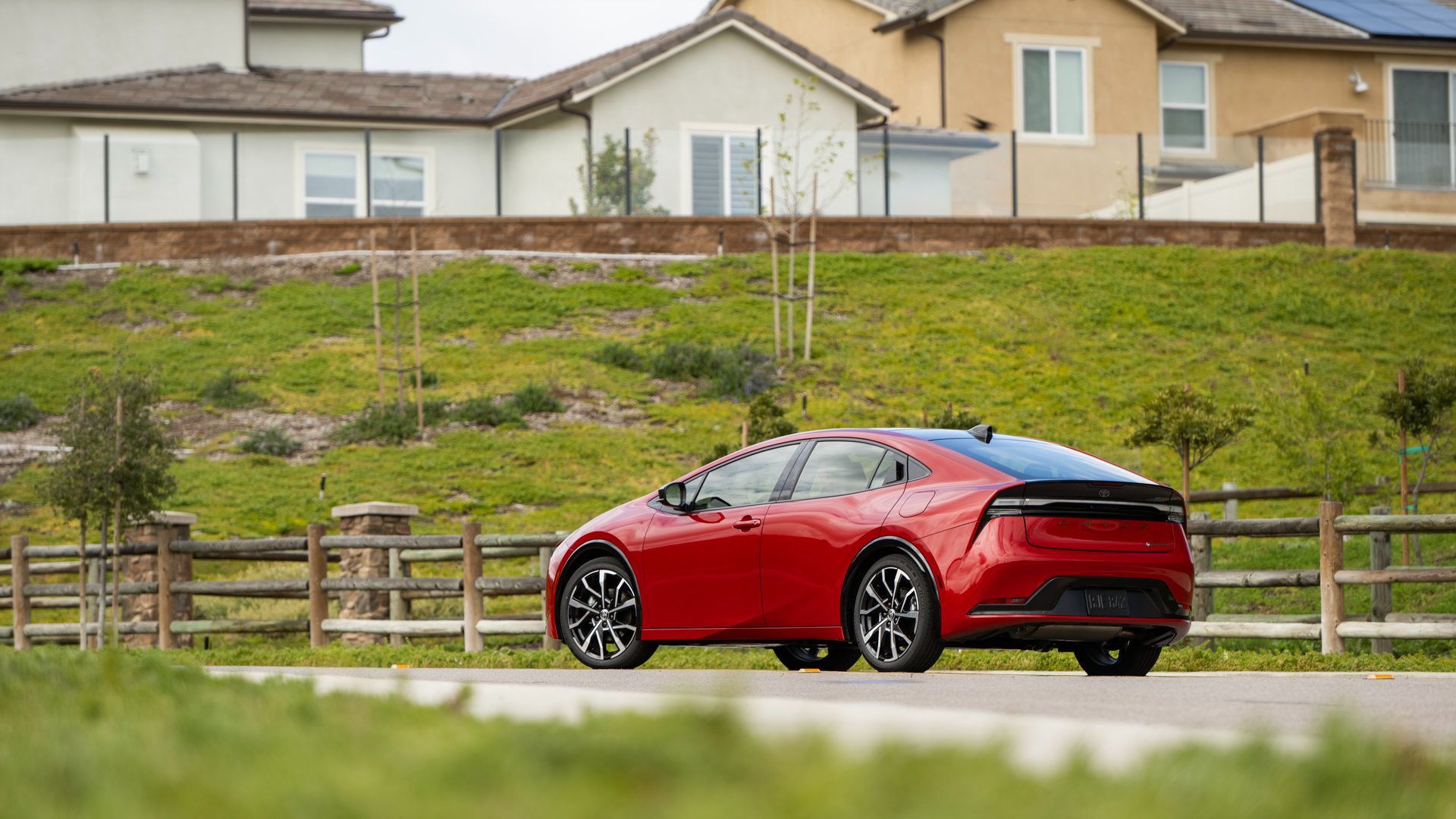
The Hybrid’s fuel economy holds steady at 4.8 L/100km combined, whether you’re in the XLE AWD or the Limited AWD. There’s no plug and no battery to manage. The system recovers energy through regenerative braking and a low-speed EV Mode for brief stints without the gas engine.
The Plug-in Hybrid works differently. Its 13.6 kWh lithium-ion battery gives the SE trim a manufacturer-estimated 72 km of all-electric range. The XSE and XSE Premium trims are rated for 64 km. A full charge on a Level 2 charger takes about four hours.
Once the battery runs down, the Plug-in Hybrid keeps going as a standard hybrid. The SE trim is rated at 4.5 L/100km combined in that mode. The XSE and XSE Premium trims land at 4.9 L/100km combined in hybrid mode.
For Ontario commuters, the gap between 64 km and 72 km of electric range often decides whether a daily round trip fits inside a single charge, since most commutes fall well under both figures.
Winter Traction in Ontario
This is where the two layouts diverge most. The Hybrid’s AWD-e system is standard on both the XLE AWD and Limited AWD, splitting power to the rear wheels when the front tires lose grip. The Plug-in Hybrid is front-wheel drive across the SE, XSE, and XSE Premium trims.
Ground clearance tells a similar story. The Hybrid sits at 152 mm on both trims. The Plug-in Hybrid’s SE trim rides lower at 142 mm, while the XSE and XSE Premium trims match the Hybrid at 152 mm.
For drivers who regularly deal with unplowed roads, steep driveways, or highway driving in heavy snow, the Hybrid’s AWD-e system and consistent ground clearance are the more direct answer. The Plug-in Hybrid’s front-wheel-drive layout can still handle typical winter commuting, but it doesn’t add the rear-wheel assist the Hybrid offers when conditions turn icy.
Which 2026 Prius Powertrain Is Right for You?
If you don’t have access to a charger, or your winter driving includes rural roads, a gravel lane, or a steep driveway, the Hybrid’s AWD-e system and 4.8 L/100km combined rating deliver dependable efficiency without asking anything of you beyond fill-ups.
If you have a Level 2 charger at home or at work and your daily round trip fits inside 64 to 72 km, the Plug-in Hybrid lets you run on electric power for most of your driving and fall back on a 4.5 to 4.9 L/100km hybrid mode for longer trips.
- Choose the Hybrid if: you want standard AWD-e traction, don’t have charging access, or drive mostly highway routes.
- Choose the Plug-in Hybrid if: you have home or workplace Level 2 charging and a commute under roughly 70 km each way.
Test Driving Both 2026 Prius Powertrains
The 2026 Prius lineup gives Ontario drivers a genuine choice between all-weather traction and electric-first commuting, built around the same core hybrid system with different priorities for each.
Visit Erin Park Toyota in Mississauga to test drive both the Prius Hybrid and Prius Plug-in Hybrid, compare how each handles your regular routes, and work with our team to estimate what your fuel and charging costs could look like based on your commute.